
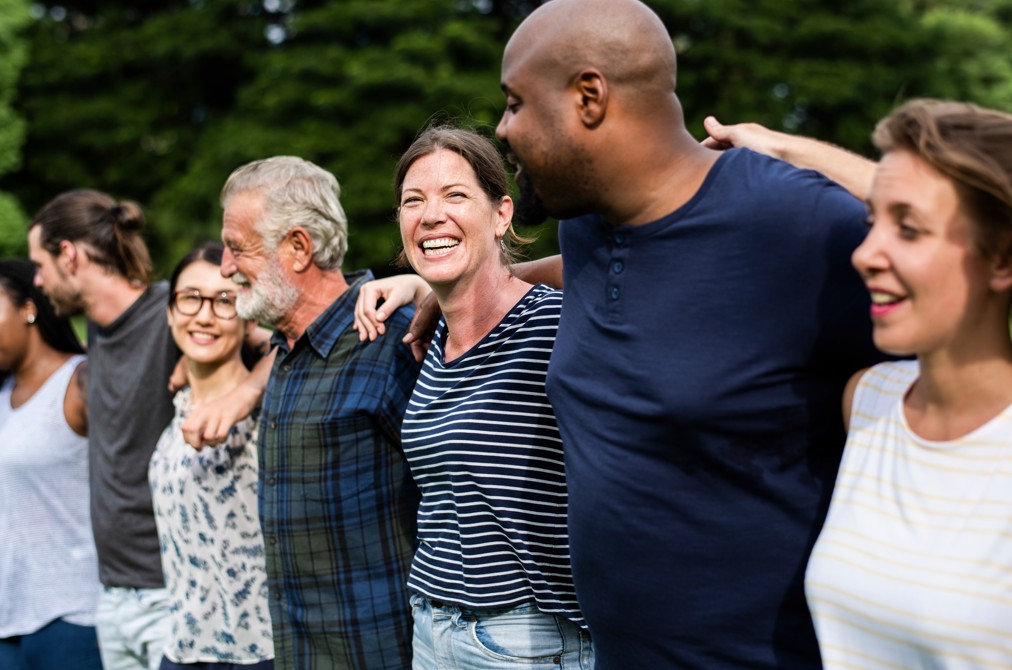
The role of spiritual community in health and vitality
— Originally published in the Source Weekly, from Dr Phillips’ monthly column, The Medicine Cabinet Within.
The concept of rugged individualism is a central theme in the American ethos, and for many still runs deep in the way we move through our lives. The idea that it is through our own grit and determination that we will find success, happiness and well-being certainly has its place, but in some ways is at odds with a life well-lived within community. Taking this concept a step further, research suggests that being involved with a spiritual or religious community fosters an internal sense of well-being both mentally and emotionally and offers measurable benefits for physical health at the same time.
Physical health and the absence of disease for the last century or so has been relegated primarily to the realm of biochemical medicine, surgery and drugs, food and diet—issues solely of the physical realm. While this approach has undoubtedly brought us tremendous benefit in every area of medicine, it has also neglected the depths by which our emotional, mental and spiritual well-being also influence and inform the nature of our biochemical landscape. Hippocrates, who lived around 400 B.C.E. and is still considered the “father of modern medicine” (in conventional medicine as well) held the belief that body, mind, and spirit are inseparable when addressing health and disease. This thinking has informed many of the alternative, holistic and spiritual approaches to health that have again gained traction in the last 50 years or so.
Looking more closely at the spiritual aspect of our lives, it is fascinating that we humans, from the very beginning, have sought to understand ourselves through the lens of something greater than ourselves—something largely unseen and immeasurable. For many this is a felt sense, and for others it is defined by a religious or spiritual tradition that helps to guide and shape a moral code of living in a kind and loving way. In most cases this also means being part of a community where people can connect and support one another through life’s tribulations and celebrations.
Community in this way helps to create connection and meaning with one another to foster conversation around understanding life’s more complex issues. Many spiritual or religious traditions also help us tune in to a sense of something greater than our own minds and ego, a power that may ultimately be the animating force of all the seen things in our world. Tuning into these depths with others and sharing it with a spiritual community helps to create a richness that not only helps make life more purposeful and meaningful, but also contributes to our health in a number of ways.
A study in the NIH library entitled “The Link Between Spirituality and Longevity” revealed that attending a spiritual community service once or more weekly was associated with 33% lower all-cause mortality, 27% lower cardiovascular mortality, and 21% lower cancer mortality, compared to those who had never attended a religious service. The studies included in this meta-analysis also indicated that being part of a spiritual community was associated with decreased incidence of hypertension, congestive heart failure and other cardiac conditions. Additionally, positive benefits for the brain and nervous system and decreased incidence of cognitive decline and dementia were described. This study suggests that such benefits exist for reasons that include the positive impacts of social support, stress reduction, psychological well-being, positive health behaviors and support around life purpose.
Ultimately, many of the principles and qualities that are taught and encouraged within spiritual traditions and communities simply go hand in hand with well-being and a life well-lived. The qualities of forgiveness, mercy and compassion, love and kindness, tolerance and acceptance (to name a few) without a doubt lead to decreased levels of individual anxiety, depression and stress. At every level these principles are medicine for the world and for us as individuals. Being engaged with a community that supports and teaches these values could certainly be considered an important part of any treatment plan.
Joshua Phillips, ND is a naturopathic physician and the director at Hawthorn Healing Arts Center in Bend. Appointments with Dr. Phillips are available by calling 541-330-0334 email [email protected] or visit our online request form.